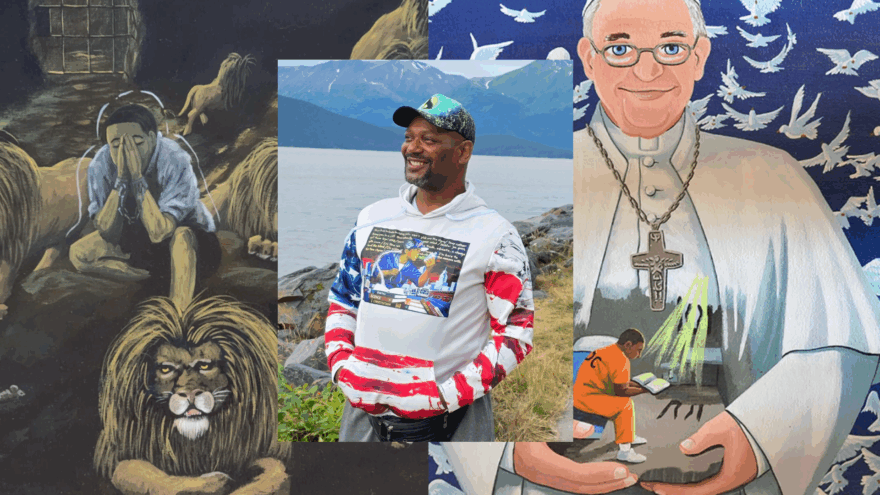
Art for Justice Event at Moravian University to Feature Daniel Gwynn’s Story and Artwork

BETHLEHEM, PA, September 22, 2025 – Moravian University School of Theology, in partnership with Bethlehem Area Moravians, will host “Art for Justice” on Sept. 30, featuring Daniel Gwynn, whose powerful paintings chronicle his 30-year journey on Pennsylvania’s death row for a crime he did not commit.

The evening will include an art exhibit and reception at 5 p.m. in the Bahnson Center Lobby, followed by Gwynn’s presentation at 6 p.m. in the Bahnson Center Saal. The Bahnson Center is located at 60 West Locust Street, Bethlehem.

The event is in person and available to follow via Zoom. While all are welcome to attend, registration is encouraged for both in person and online attendees. The Zoom link and recording of the event will be provided for those who register at moravianseminary.edu

Convicted in 1994 at age 24 for an arson murder in West Philadelphia, Gwynn spent three decades maintaining his innocence while facing execution. In 2024, at age 54, he finally walked free as an exonerated man.

“Art became my lifeline,” Gwynn explains of his time in what he describes as being “trapped in a box where the days just tick away.” Throughout his incarceration on death row, painting served as both personal therapy and a means of preserving his humanity in the face of profound injustice.

Born and raised in Philadelphia by his maternal grandmother after experiencing parental abandonment, Gwynn’s early life was marked by the city’s crack cocaine epidemic, violence, and urban decay. Despite attending school regularly and singing in his church choir, the challenging environment would later intersect with a justice system that failed him.

Now working with Art for Justice (artforjustice.org), Gwynn dedicates himself to exposing systemic flaws in the criminal justice system and advocating for more humane approaches to justice and rehabilitation. Learn more about Gwynn at danielgwynn197.com

The Sept. 30 event will provide attendees with a rare opportunity to view Gwynn’s powerful artwork while hearing firsthand about his remarkable journey from death row to freedom, including time for questions and dialogue about art, justice, and redemption.

Art for Justice is an organization dedicated to addressing systemic problems within the criminal justice system through artistic expression and advocacy, promoting solutions that emphasize rehabilitation, humanity, and true justice.

ART FOR JUSTICE EVENT DETAILS

  • When: Tuesday evening, Sept. 30, 2025

  • Where: Bahnson Center, 60 West Locust Street, Bethlehem (artist talk also available on Zoom)

  • Exhibit and reception: 5 p.m. in the Bahnson Center Lobby

  • Artist talk: 6 p.m. in the Bahnson Center Saal
  • Register for this event


Reentry in the Lehigh Valley: Breaking Barriers & Building Second Chances

Get More LVWITHLOVE Content

Guests:

  • Dr. Michael Pittaro – Director of Corrections, Northampton County
  • Jose Rivera – Community Engagement Coordinator, United Way of the Greater Lehigh Valley
  • Attorney David D. Ritter – Criminal Defense Attorney, Kitay Law Offices

Reentry after incarceration is a process that affects all of us, whether we realize it or not. Did you know that 65% of people released from prison end up reoffending? Or that defendants who can’t afford bail often spend 90 to 180 days behind bars before their case is even resolved? These barriers make successful reintegration nearly impossible, but there are solutions—like expanding mental health and drug courts, addressing pre-trial detention challenges, and improving job opportunities for returning citizens.

In this episode of Lehigh Valley with Love, we dive deep into the realities of reentry with experts and those who have lived through the process. Our guests share their firsthand experiences and insights on what works, what doesn’t, and what needs to change.

Thank you to Dr. Joseph Roy for his invaluable help producing this episode!

Watch Episode


www.lvwithlove.com
LV With Love Logo

Thank you to our Partners!
WDIY

Lehigh Valley Health Network

Wind Creek Event Center

Michael Bernadyn of RE/MAX Real Estate

Molly’s Irish Grille & Sports Pub

Banko Beverage Company

Blog: The Realities of Reentry – A Recap of the Podcast

Understanding Reentry
Reentry is the process by which formerly incarcerated individuals reintegrate into society after serving their time. While release from prison might seem like the end of a sentence, for many, it marks the beginning of another battle—finding employment, securing housing, and avoiding recidivism.

Jose Rivera, Community Engagement Coordinator at United Way of the Greater Lehigh Valley, explains how reentry was once a non-existent term. Instead, individuals were labeled “ex-cons” or “felons,” limiting their opportunities. While the language has evolved, the systemic barriers remain overwhelming for many returning citizens.

The Challenges of Reentry
Dr. Michael Pittaro, Director of Corrections for Northampton County, highlights the recidivism rate of nearly 65% in the U.S., emphasizing that many individuals return to the same communities where they faced prior struggles. Without intervention, they encounter the same environments, influences, and hardships that led to their incarceration.

Attorney David Ritter sheds light on pre-trial detention and bail reform, explaining that individuals can spend 90 to 180 days in jail before their trial simply because they cannot afford bail. This extended detention causes job loss, housing instability, and financial hardship, making reintegration even more difficult after release.

Another major obstacle is the role of parole and probation officers. Some officers serve as mentors, helping individuals access resources, while others take a more punitive approach, increasing the likelihood of reoffending. Rivera stresses that a supportive parole officer can make all the difference in successful reentry.

Employment and Housing: Critical Factors in Reentry Success
Securing employment after incarceration is a major challenge. Dr. Pittaro explains how background checks and job applications with felony-related questions create barriers, despite Pennsylvania’s “Ban the Box” initiative. While this law prevents employers from immediately disqualifying applicants based on criminal history, employers still have access to background checks and often reject qualified applicants.

Housing is another pressing issue. Many landlords deny applications from formerly incarcerated individuals, making it difficult to secure stable living conditions. Even those who find employment struggle with rising housing costs and parole restrictions that limit where they can live. David Ritter emphasizes that parole conditions often require a stable address, but without accessible housing, securing parole itself becomes an obstacle.

Solutions That Are Making a Difference
Despite the challenges, several initiatives in the Lehigh Valley are making strides toward improving reentry outcomes:

Cognitive Behavioral Therapy (CBT): A tool used in reentry programs to help individuals recognize and change negative thought patterns.
The Reentry Coalition: A network of organizations collaborating to support individuals reentering society.
Specialty Courts (Drug Court & Mental Health Court): Programs aimed at rehabilitation rather than incarceration, diverting nonviolent offenders toward treatment-based solutions.
One-Stop Reentry Centers: Efforts are underway to establish centralized locations where individuals can access job training, mental health services, housing assistance, and legal aid in one place.
While these programs are promising, expanding housing access, providing employer incentives, and improving parole officer training remain key priorities in reducing recidivism.

Final Thoughts
Reentry is not just about the individual—it’s a community issue. When individuals successfully reintegrate, crime rates decrease, families remain intact, and communities grow stronger. However, employment barriers, housing restrictions, and punitive parole policies must be addressed to create long-term success.

This episode of Lehigh Valley with Love underscores the need for policy changes, stronger community support, and a shift in public perception—from punishment to rehabilitation.